

 Deutsch
 Français
 Italiano
 English
Locked out of your flat: what to do, calmly and step by step
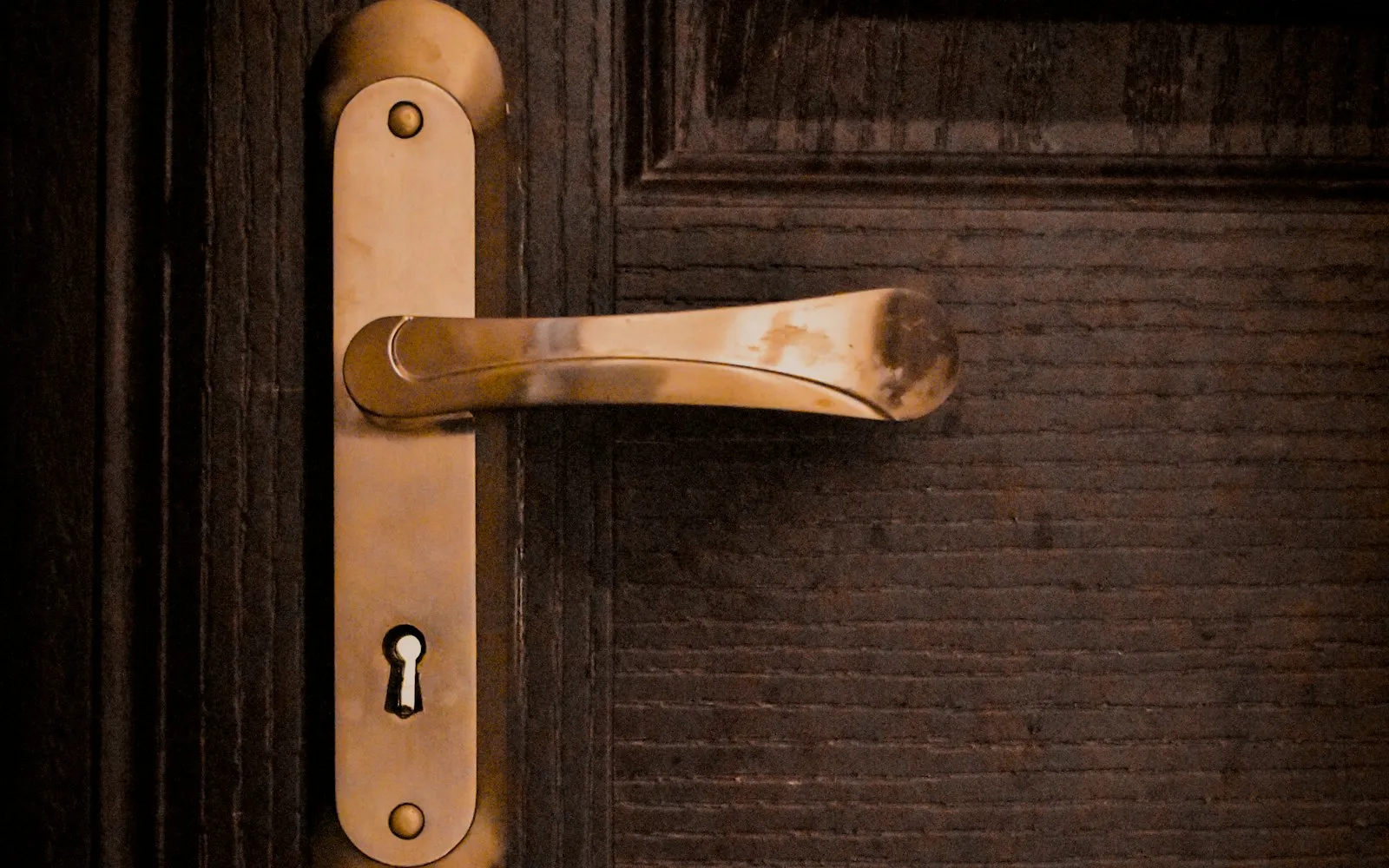
Locked out: what to do first?
If you are locked out, the first rule is to stay calm and quickly check whether there is any danger inside. If everything is under control, you have time to deal with the situation calmly, step by step.
A door that has swung shut is annoying, but it is usually not an emergency in the true sense. Panic tends to lead to poor decisions, such as DIY attempts that damage the lock or the frame. Take a deep breath before you act.
Then ask yourself one key question: was the door simply pulled shut, or did you lock it with the key? A door that has been pulled shut is held only by the latch, the angled bolt that clicks into place automatically. It can almost always be opened without damage. We explain the difference between a door pulled shut and a locked door in more detail below.
When is being locked out a real emergency?
It is an emergency when people, animals or property behind the door are in immediate danger. Then every minute counts, and you should act at once rather than wait for a spare key.
- The hob, an iron or a candle is still on and you can smell burning or see smoke: call the fire brigade on 118 immediately.
- A young child is alone in the flat: if there is any danger, call the police on 117 and keep talking to the child through the door.
- Someone inside has fallen or is not responding: call the ambulance service on 144.
- A pet is trapped and in distress, for example in hot weather, or water is leaking: get help without delay.
In an acute emergency, the emergency services can gain access themselves. In less urgent cases, for instance if a pan has simply been left on a hob that is switched off, a locksmith is the right person to call. Tell them clearly on the phone if a child or animal is inside, as this changes the priority.
Who has a spare key? Ask these people first
Before calling a locksmith, think for a moment about who might have a spare key. It is often the quickest and cheapest solution.
- Flatmates, your partner or family members who also have a key
- Neighbours or friends you once gave a spare key to
- The caretaker, known in Switzerland as the Hauswart or concierge, who has access in many buildings
- The property management or landlord, who often keep a key to rented flats, outside office hours sometimes via an emergency number
Do not count on the property management coming round in the evening or at the weekend, but do ask whether they have an on-call service. In a building with a master key system, where one key opens several doors, only the property management can usually issue additional keys.
To stop it happening again, one simple habit helps: always pick up your key before leaving the flat, even if you are only taking the rubbish down. A spare key with someone you trust nearby is also sensible, but never under the doormat or in a flowerpot.
Why you should not open the door yourself with a card or wire
Attempts with a credit card, a piece of wire or a screwdriver often do more harm than good. What looks easy in films usually fails on a modern door because the gap is simply too narrow.
Many flat doors in Switzerland have seals all round, a security escutcheon or a latch protected by an extra mechanism. Levering the door bends the frame, scratches the door leaf or tears out the seal. In a rented flat, this can lead to disputes when you hand the flat back at the end of your tenancy.
Climbing in via the balcony or a window is dangerous too, especially on upper floors. No key is worth the risk of a fall. A professional opens a door that has been pulled shut in a controlled way, with the right tools and usually within minutes.
Step by step: what to do when you are locked out
Following a clear order helps you keep a cool head. These steps have proven themselves in practice:
- Stay calm and check whether there is any danger inside: the hob, a child, a pet or leaking water.
- In an acute emergency, call 118, 117 or 144 immediately.
- Check whether the door is only pulled shut or locked, and whether a key is still in the lock on the inside.
- Ask flatmates, neighbours, the caretaker or the property management for a spare key.
- If nobody can help, call a locksmith and describe the address, the type of door and the situation precisely.
- Ask for the price on the phone and have it confirmed on site before work begins.
- Have proof of residence ready, or think about how you can show it once the door is open.
Use the waiting time to sort out your proof of residence. If you still have your mobile phone, you may find a photo of your tenancy agreement or an email from the property management on it.
What is the difference between a slammed door and a locked door?
A door that has slammed shut is held only by the latch, while a locked door is also held by the deadbolt. That is what makes all the difference when it comes to opening it.
If you pull the door closed behind you without turning the key, it has slammed shut. If you turn the key once or several times, it is locked. Several parts of the lock work together:
- Latch: the angled bolt that clicks into the strike plate automatically when the door closes and is drawn back by the handle.
- Deadbolt: the square bolt that only extends when you turn the key and holds the door firmly shut.
- Strike plate: the metal plate in the frame that latch and deadbolt engage with.
- Lock cylinder: the part you put the key into; it moves the deadbolt.
Many main entrance doors also have a multi-point lock with additional bolts at the top and bottom. As a rule, these only engage when the door is locked.
How can you tell whether your door is slammed shut or locked?
If you simply pulled the door closed behind you, it has usually slammed shut. If you are unsure, a few simple observations will help you brief the locksmith on the phone.
Work through these points:
- Think about whether you or someone else turned the key, and if so, how many times.
- Check whether there is a handle or a fixed knob on the outside. A fixed knob cannot be turned from outside.
- See whether the door seems to be bolted at the top and bottom as well, as with a main entrance door with a multi-point lock.
- Find out whether it is an automatic lock: it bolts itself when the door closes, so the door is effectively locked.
- Note whether a security escutcheon or high-security cylinder is visible.
- Say whether it is a flat door, a building entrance door or a door with glass panels.
The more precise your description, the better the technician can estimate the effort and price and bring the right equipment. If you are not sure, just say so: an experienced technician will clarify the rest on site.
Why can a slammed door usually be opened without damage?
Because the latch can be reached from outside: a professional can push it back through the gap between the door and the frame. The lock and the door stay intact.
The technician uses a flexible opening card, a latch hook or a similar specialist tool. If seals make the gap very narrow, they switch to finer tools or operate the inside handle with a device passed under the door.
It takes a little longer with security doors whose gap is covered by a strip, or with locks that have a latch-blocking feature. Even then, a door that has slammed shut can usually be opened without lasting damage; it simply takes more patience and the right tool.
At BLITZAUF24, we open over 95 % of slammed doors without damage. Find out more on our door opening page.
What happens if the door is locked?
With a locked door, the deadbolt has to be moved back via the lock cylinder. That takes more time and experience and cannot always be done without damage.
The technician first tries to open the cylinder non-destructively, using fine tools to set the pins inside one by one, as if the right key were in the lock. With basic cylinders this often works; with modern high-security cylinders it is much harder or impossible.
If there is no other way, the cylinder is drilled out. Only the cylinder is destroyed, not the door. The technician then fits a new cylinder on the spot, which amounts to a small lock replacement. A reputable locksmith always discusses this step and its cost with you beforehand.
This also explains why opening a locked door usually costs more than opening one that has slammed shut: it takes longer and parts may be needed. That is why the question «slammed shut or locked?» makes such a difference to the price estimate on the phone.
What role do anti-drill and anti-pull security cylinders play?
High-security cylinders are designed specifically to resist tampering. They protect against burglary but also make opening a locked door more time-consuming for a locksmith.
Typical protective features include:
- Anti-drill protection: hardened steel pins or inserts that stop a drill bit.
- Anti-pull protection: prevents the cylinder being pulled out of the door with an extraction tool.
- Anti-pick protection: specially shaped pins that make opening without a key difficult.
- Security escutcheon: a plate with a cylinder guard that gives the cylinder extra protection from outside.
In practice, if a door with such a cylinder is locked, opening it takes longer and requires more effort. For a door that has only slammed shut, these features usually make no difference, because the cylinder is not touched at all. Read more in our guide to lock cylinders.
What proof do you need to have the door opened?
A reputable locksmith will only open the door once you have shown that you are entitled to enter. Usually an ID with your address, your tenancy agreement or a confirmation from the property management is enough.
Of course, these documents are often inside the flat. That is not a problem: you simply show them immediately after the door is opened, in the technician's presence. Neighbours who know you can also confirm who you are.
This check is not a sign of mistrust; it protects you. Without it, anyone could claim to live in your home. A provider who opens doors without any check at all should therefore make you wary, as should other typical warning signs of dubious locksmiths.
What does the technician do on site?
The technician first clarifies the situation, the price and the method, and then opens the door with as little damage as possible. With a door that has only been pulled shut, this almost always works.
For a door opening of this kind, the technician usually uses a flexible opening card or a latch hook. These are guided between the door leaf and the frame to push the latch back. On very tight-fitting doors, finer tools are used, or a device that reaches under the door to operate the inside handle.
If a key is still in the lock on the inside, this is usually no obstacle with a door that has only been pulled shut, because the technician works directly on the latch. With a locked door, however, it can make opening from outside more difficult, so mention it when you call.
If the door is locked, different techniques and more time are needed. Drilling remains the last resort: it is discussed with you beforehand and only affects the cylinder, never the door itself. At the end, you receive a written receipt listing the work carried out.
Should you always lock the door when you go out?
For security reasons, yes: a door that has only slammed shut is easier for intruders to open than a locked one. Locking it is a simple and effective habit.
It can also matter for insurance. Some policies require doors to be locked when you leave your home, or distinguish between cases with and without forced entry. Check your household contents insurance policy or ask your insurer directly, as conditions vary.
When you are at home, things are different: keep the key within easy reach so you can get out quickly in an emergency such as a fire. In the event of a fire, call the fire brigade on 118.
However, avoid leaving the key in the cylinder on the inside if someone needs to be able to get in from outside. With many cylinders, the door can then no longer be unlocked from outside. Cylinders with an emergency function can still be operated from outside even with a key inserted on the inside.
How BLITZAUF24 helps when you are locked out
BLITZAUF24 can be reached around the clock, including at night, at weekends and on public holidays. You are told the price before any work starts, and only then do you decide.
We open over 95 % of doors that have been pulled shut without damage, and we check proof of entitlement on every call-out. You can pay in cash, by card, with TWINT or on invoice. To understand how the price is made up, read our guide How much does a locksmith cost?. If your door is locked, our lockout service takes over.
Frequently asked questions on this topic
Generally not, as long as there is no danger. The police (117) and the fire brigade (118) respond when people or animals are at risk or there is a threat of fire, for example because the hob has been left on. For an ordinary lockout with no danger involved, they are not the right contact. A spare key, the property management or a locksmith can help instead.
Ask a neighbour whether you can make a quick call; most people are happy to help in this kind of situation. It is a good idea to note down the number of someone you trust and the emergency number of your property management today, for example on a slip of paper in your wallet. The emergency numbers 117, 118 and 144 are free from any phone.
Yes, in the vast majority of cases. Because only the latch is engaged, it can be pushed back through the gap with specialist tools. The lock, cylinder and door leaf remain intact. Very tight-fitting doors with a security escutcheon take more work. We open over 95 % of doors that have been pulled shut without any damage.
If you locked yourself out, you will generally have to bear the cost yourself, even in a rented flat. Some household contents insurance policies or assistance services do, however, cover locksmith costs in full or in part. Check your policy or ask your insurer directly. Keep the written receipt so that you can submit the costs if necessary.
Yes, an experienced technician can usually see very quickly on site whether only the latch is holding the door or whether the deadbolt is also engaged. A look into the gap between door and frame is often enough. It still helps to tell them honestly on the phone what you know, so they bring the right tools and give you a realistic estimate in advance.
No. Many locked doors can be opened without drilling, given experience and the right tools, especially with basic cylinders. With high-quality security cylinders that have anti-pick and anti-drill protection it is harder. Drilling is always the last resort. A reputable technician explains beforehand why it is necessary and then replaces the cylinder on the spot.
An automatic lock extends one or more bolts by itself as soon as the door closes. You mostly find them on the main entrance doors of apartment buildings. For a door opening, this means that even a door that has only slammed shut behaves like a locked one. So be sure to mention this type of lock when you call.
In rented accommodation, the cylinder is usually part of the rented property, especially if it belongs to a master key system. So inform your property management or landlord, before or after the replacement. Check what your tenancy agreement says. With a master key system, a replacement usually needs to be coordinated with the property management so that all keys continue to work.
Related services


