

 Deutsch
 Français
 Italiano
 English
Getting a safe opened: forgotten code or lost key
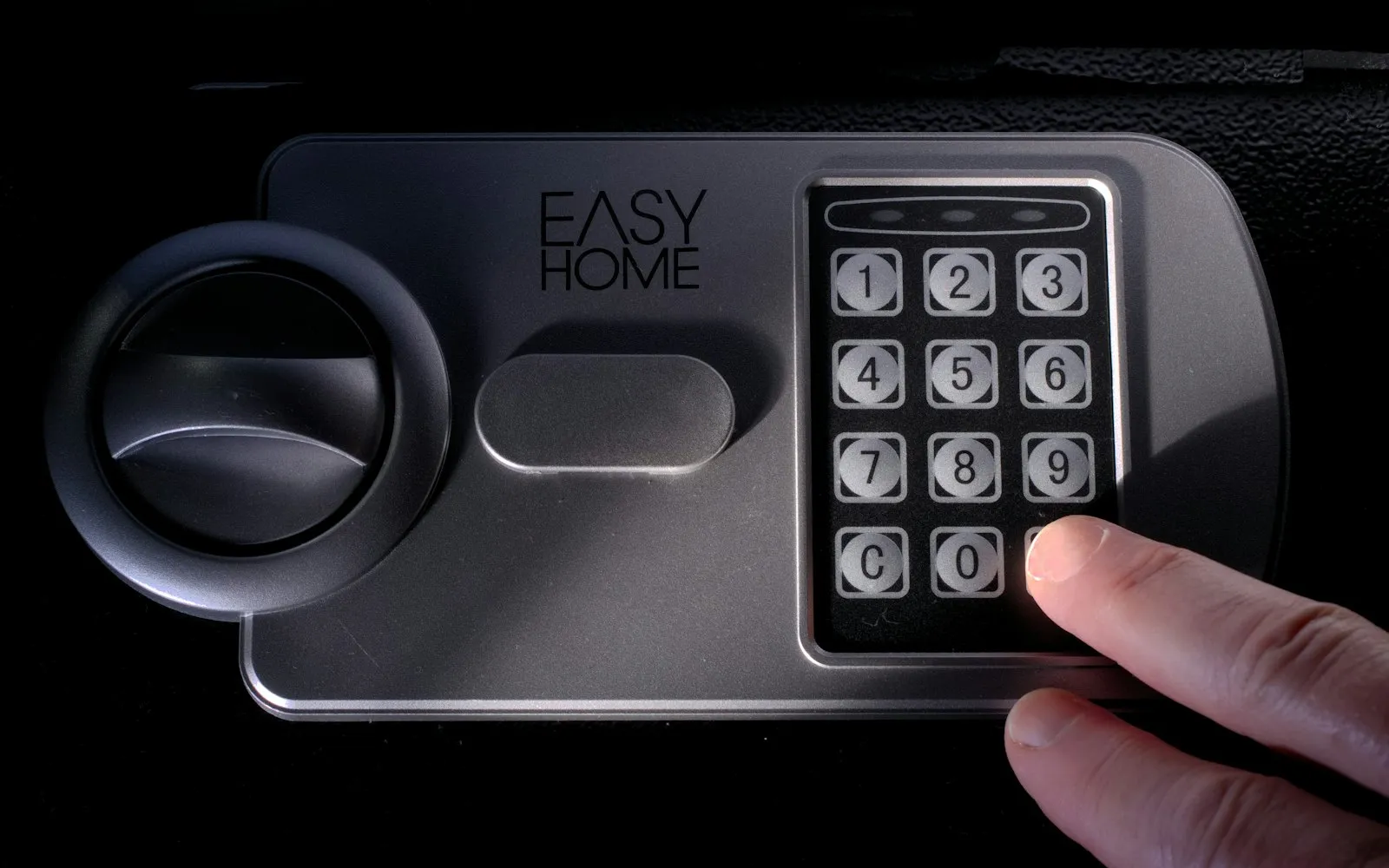
The safe won't open: what is the first step?
Stay calm and don't use force. Start by finding the safe's paperwork, which often contains an emergency code, the key number or the manufacturer's contact details.
Whether you have forgotten the code or lost the key, a safe is built to withstand attacks. Prying, hammering or randomly trying combinations will at most damage the lock and make a professional opening harder later on. Before getting a specialist in to open the safe, take it step by step.
- Find the manual, warranty card and proof of purchase.
- Read the rating plate on the safe or door: manufacturer, model and, if shown, the serial number.
- With electronic locks, check the battery and any lockout period (see next section).
- Ask the manufacturer or dealer about an emergency opening or a replacement key.
- Only if that doesn't work: call in a safe opening specialist.
Forgotten code: what can you check yourself?
Check the battery, the lockout period and any emergency functions before calling for help. Quite often the code itself is not the problem.
An electronic lock needs power. When the battery is low, the keypad responds slowly, beeps unusually or rejects the correct code. On many models the battery compartment is accessible from outside, beneath the keypad; others have contacts for an external battery. Your manual explains how it works on your safe.
After several wrong entries, many locks activate a lockout period: during this time every entry is ignored, even the right one. Further attempts can extend the lockout. Wait until it has fully expired, then enter the code calmly. These points are worth checking:
- replace the battery, even if the display still lights up
- wait out the lockout period instead of carrying on typing
- look in the manual for a master or factory code you may have stored separately
- check whether there is an emergency lock with an override key behind a cover, as on many basic electronic safes
- for mechanical combination locks, check the dialling sequence and direction against the manual
Lost key: how can the manufacturer help?
Many manufacturers will supply a replacement key on the basis of the key number and proof of ownership. Make a note of the number as soon as you buy a safe.
Safe keys, often double-bit keys with cuts on both sides, cannot simply be copied at any key-cutting kiosk. The key number is usually stamped on the key itself, printed on a card or listed in the purchase documents. With that number and the receipt, the manufacturer or an authorised dealer can generally provide a replacement.
If the number is missing or the manufacturer no longer exists, having a specialist open the safe is the usual route. The lock is then often replaced so that a key found by someone else no longer gives access. If your house key has gone missing too, see our guide on what to do after losing your keys.
Why you have to prove the safe is yours
A reputable professional will only open a safe if you can show you are entitled to. This protects both you and the contents.
Safes often hold cash, jewellery, documents or data storage devices. If any locksmith opened them without asking questions, unauthorised people could easily get hold of other people's valuables. So expect to show ID and prove your right to the safe.
- official ID, ideally showing the address where the safe is located
- receipt, invoice or warranty card for the safe
- for rented homes: tenancy agreement or confirmation from the property management, if the safe belongs to the flat
- for inheritances: certificate of inheritance or power of attorney from the heirs
- for companies: commercial register extract or written authorisation from an authorised signatory
Non-destructive opening or drilling: what does it depend on?
It depends on the type of lock, the safe model and its security level. A non-destructive method is always tried first; drilling only happens with your agreement.
With basic furniture and electronic safes, the opening is often done via the emergency lock or a manufacturer-specific override procedure. Some mechanical locks can be opened by manipulation, meaning a trained specialist reads the lock mechanism by feel without damaging anything. This takes a great deal of experience and does not work on every model.
Higher-grade safes are specifically protected against such methods. In that case, controlled drilling is usually the only option: the specialist drills a small hole at a precisely calculated point, releases the mechanism and then seals the hole properly. The safe generally remains usable, though the lock is often replaced. You can read more about the process on our safe opening page.
Security grade and insurance: what should you bear in mind?
The security grade shows how resistant a safe is and is often a condition for insurance cover. Check with your insurer, before and after any drilling, what applies to you.
Safes are classified under European standards into security levels or resistance grades; you will usually find this on a plate on the inside of the door. The higher the grade, the more cash and valuables your household contents insurance will generally cover inside it. The exact terms are in your policy.
If a certified safe is drilled, the hole must be properly sealed so that its protection is maintained. If in doubt, ask the manufacturer whether the repair preserves the rating, and let your insurer know. If the safe was damaged in a burglary, first read our guide on what to do after a burglary and report it to the cantonal police on 117.
Store the code securely to avoid the next emergency
Change the code after the opening and keep it somewhere secure, away from the safe. A note stuck to the safe is not a solution.
Pick a code you can remember but that is not obvious: no birthdays and no simple number sequences. These options have proven themselves:
- leave the code in a sealed envelope with someone you trust or in a bank safe deposit box
- store the code in an encrypted password manager
- keep the key number, model details and receipt separate from the safe
- replace the battery regularly, for example on the same date every year
- never hide the spare key in the same room as the safe
A safe is just one part of home security. Our guide to burglary protection for your home shows which measures on doors and windows really make a difference.
Safe opening with BLITZAUF24: how it works
We are available around the clock, clarify the model and situation by phone and tell you the price before any work starts. Only then do you decide.
On site, the technician checks your entitlement as described above. No safe is opened without proof. They then choose the gentlest method available for your model and discuss any drilling with you before going ahead.
If possible, have the manufacturer, the model and a photo of the keypad ready. You can pay in cash, by card, with TWINT or on invoice.
Frequently asked questions on this topic
No. A reputable professional will only open a safe once the right of access has been established, for example with ID, an invoice, a certificate of inheritance or a power of attorney. If it is unclear who owns the safe, such as in a flat you have just moved into, speak to the landlord or property management first. The check may feel like a hassle, but it also protects your own belongings.
It varies a great deal. A simple electronic safe with an emergency lock can often be opened quickly. A heavy high-security safe may take considerably longer, especially if it has to be drilled and the hole sealed again afterwards. A reliable estimate is only possible once the manufacturer and model are known, so have that information ready when you call.
First search the estate for documents, keys or written-down codes, for instance among bank papers or in a desk. Have the certificate of inheritance ready, as nobody will open the safe without proof of entitlement. If there are several heirs, all of them should agree to the opening or be present. This helps avoid later disputes about the contents.
Generally not on your own initiative. A hotel safe belongs to the hotel, and reception usually has an emergency opening procedure. A safe built into a rented flat normally forms part of the rented property. In that case, contact the property management or landlord first. You can then agree together who arranges the opening and who covers the costs.
Related services


